

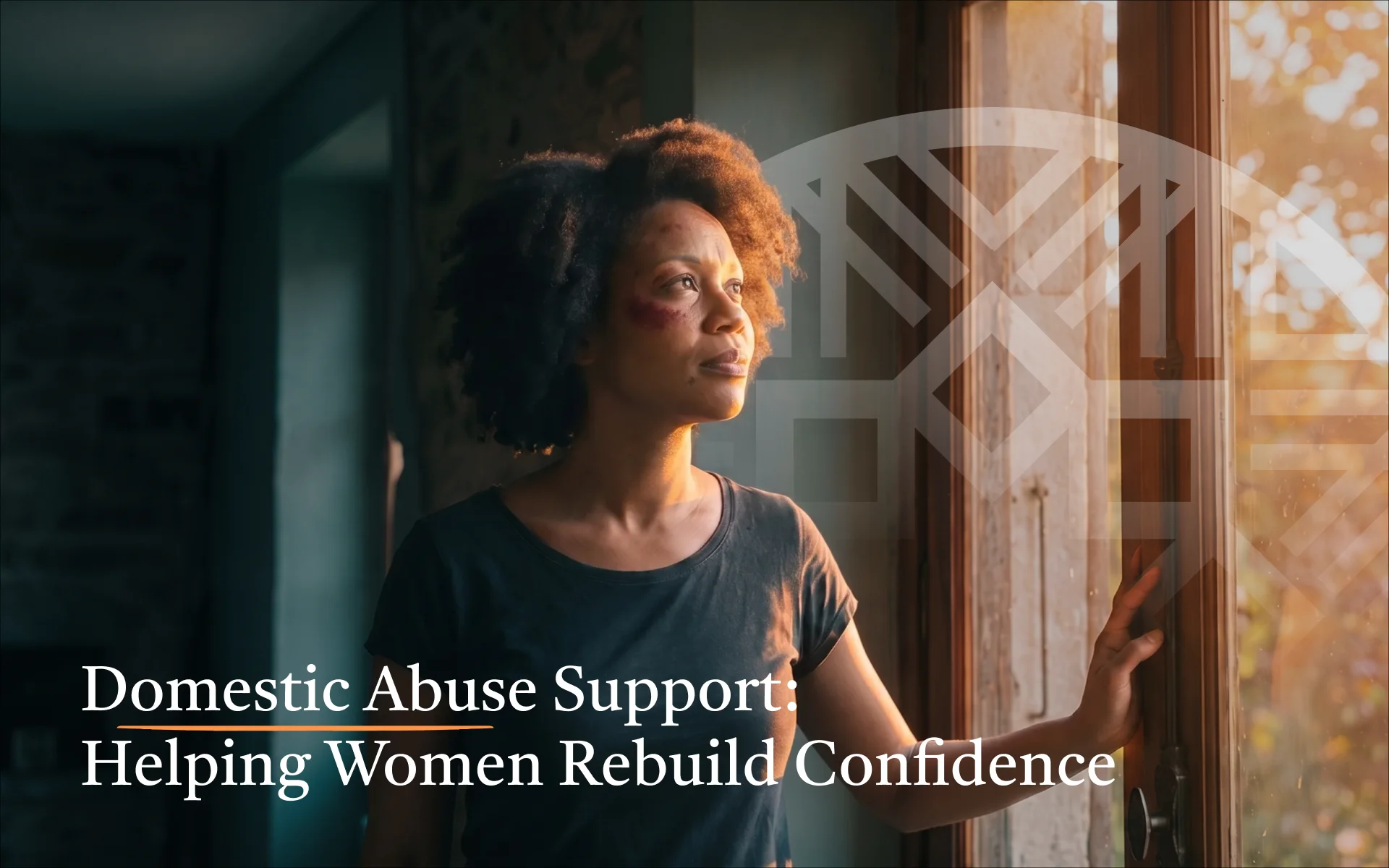
Leaving an abusive relationship can take enormous courage. But for many women, this is not the end; it is the beginning. The emotional effects of abuse can continue long after the relationship has ended, affecting confidence, self-esteem, relationships and everyday decisions.
You may find yourself questioning your judgement, struggling to trust others or wondering who you are outside the relationship. Things that once felt simple may suddenly feel difficult. You may also be dealing with practical concerns around money, housing, children or your future.
If you are experiencing this, you may be wondering where to start. The answer does not have to be everything at once.
This is why domestic abuse support is important. With the right support around you, you can rebuild your confidence, regain a sense of control and begin to create a life that feels like your own.
What is the Impact of Abuse on Confidence?
Domestic abuse is not always physical. Emotional, psychological, financial and controlling behaviour can also have a lasting impact on a person’s wellbeing.
Repeated criticism can make you question your abilities. Being constantly told what to do can make it difficult to trust your own decisions. Being isolated from friends and family can leave you feeling alone and unsure about who you can turn to.
Over time, you may even begin to believe some of the negative things that have been said about you.
That does not make them true.
Abuse can affect the way you see yourself, but it does not define who you are. Rebuilding confidence is about gradually reconnecting with your own thoughts, feelings, needs and choices.
And you do not have to feel confident before you start. Sometimes, confidence comes after you begin taking those small steps.
Why Leaving an Abusive Relationship Can Feel Complicated
There is sometimes an expectation that leaving should bring immediate relief. In reality, women leaving abusive relationships may experience many different emotions at once.
You might feel relieved and frightened. Hopeful and exhausted. Angry, guilty, lonely or uncertain about what comes next.
There may also be practical worries. You might be concerned about where you will live, how you will support yourself financially, what will happen to your children or how you will cope with life on your own.
That is a lot to carry.
These feelings do not mean you have made the wrong decision.
Starting again can be difficult, especially if you have spent a long time being controlled or made to feel dependent on someone else. It is understandable if your confidence does not return immediately.
Give yourself time. You are adjusting to a life that may look very different from the one you knew before.
Rebuilding Confidence Starts With Small Choices
Even the simplest of decisions can seem unreal after abuse. You may have become used to having someone else question, dismiss or control your choices.
So, start small.
Choose what you want to eat. Decide how you want to spend your time. Say no to something you do not want to do. Choose who you want to speak to.
These choices may seem small but they can help you reconnect with your ability to make choices for yourself.
Rebuilding confidence does not have to happen all at once. It can grow with small decisions, new experiences and times when you realise you can trust yourself again.
Maybe today, that means making one decision for yourself. Tomorrow, it might mean taking another step.
Try not to compare your recovery with anyone else’s. Your progress belongs to you.
Also Read: What If Talking to Someone Could Change Everything?
Reconnecting With People You Trust
Abuse can be incredibly isolating. You may have lost contact with friends or family, or you may have been discouraged from maintaining those relationships.
If there is someone you trust, consider reaching out when you feel ready.
You do not have to explain everything straight away. You do not even need to have the right words. Sometimes having someone listen without judgement can be enough to remind you that you are not alone.
Support after domestic abuse can take different forms. It might come from a trusted friend or relative, a counsellor, support worker or mental health professional.
The support you receive should respect your choices and help you feel safe rather than telling you what you should do.
If reaching out feels difficult, start with one person you feel comfortable with and trust. One conversation can be an opening towards your way to rebuilding your confidence.
Financial Support Can Help You Regain Independence
Money can be one of the biggest concerns after leaving an abusive relationship. Financial abuse may have involved controlling bank accounts, restricting access to money, preventing employment or creating financial dependence.
For some abused women, financial worries can make the future feel uncertain.
If this is something you are facing, looking for financial help for abused women is not a sign of weakness. Depending on your circumstances, financial support for women may be available through charities, local services and other organisations.
You may not know what support you are entitled to, and that is okay. Speaking to a suitable support service can help you understand your options and work out what steps may be available to you.
You do not need to solve everything immediately.
Taking one step towards greater financial independence can help create a stronger sense of stability and control.
Learning to Trust Yourself Again
One of the most difficult parts of recovering from abuse can be learning to trust your own judgement.
You might find yourself asking:
Did I overreact?
Was it really that bad?
Could I have handled things differently?
These questions can arise after prolonged criticism, manipulation or control.
Try to remember that you do not have to prove your experience to everyone. What you feel is okay and you deserve respect and dignity.
Sometimes when you put your thoughts down on paper, you can see patterns in your feelings. Talking to a counsellor or mental health professional can also give you a safe space to process what happened and understand how it has affected you.
Trusting yourself again takes time. If you find yourself second-guessing everything, be gentle with yourself. You are learning to listen to your own voice again.
Looking After Your Mental Health During Recovery
Leaving abuse can bring relief, but it can also leave you emotionally exhausted. You may experience anxiety, low mood, difficulty sleeping or a heightened sense of worry.
Pay attention to what your mind and body are telling you.
Simple routines can build a sense of stability. Eating regularly, getting enough rest, spending time outside and maintaining contact with supportive people can all provide small points of comfort during a difficult period.
You do not have to force yourself to feel positive.
Some days may feel manageable while others may feel much harder. That is okay. Recovery is not a straight line and one bad day does not mean you’ve lost all the progress you’ve made.
If your emotional wellbeing is becoming difficult to manage, reaching out for professional mental health support can give you a safe place to talk through what you are experiencing.
You deserve that space.
You Do Not Have to Recover Alone
There can be pressure to appear strong after leaving an abusive relationship. You may feel that because you have left, you should now be able to move forward without looking back.
Healing does not always work that way.
You may have moments when you feel proud of how far you have come, followed by moments when fear, sadness or uncertainty returns. This does not mean you are going backwards.
Support for women leaving abusive relationships should not stop at the point of leaving. Emotional recovery matters too.
Proper support can give you space to process your experiences, understand your emotions and gradually rebuild your confidence.
You deserve support not only to move away from an abusive situation, but to build a life where you feel safe, respected and able to make your own choices.
There Is No Deadline for Rebuilding Your Life
You do not have to become exactly who you were before the abuse.
You are allowed to grow into someone new.
For one woman, rebuilding confidence might mean returning to work. For another, it might mean reconnecting with a friend, making independent decisions or simply feeling comfortable in her own space again.
There is no single definition of recovery.
What matters is that, little by little, your life begins to feel like yours again.
If you are looking for domestic abuse support, remember that asking for help is not a failure. It can be an important step towards feeling safer, stronger and more in control of your future.
If you want a safe space to talk about what you’re going through, Mindful Ummah offers mental health support for Muslims that helps people navigate difficult experiences and protect their mental health.
You do not have to figure everything out today. Start with one conversation, one decision or one small step that helps you feel a little more in control.
What happened to you does not define your worth.
You can rebuild your confidence. You can find your voice again. And, in time, you can begin to feel at home in your own life.
Your future can still be shaped by your choices, your strength and the life you want to build.
If you are ready to talk, Mindful Ummah is here to support you. Reach out and take that first step towards rebuilding your confidence and wellbeing.
Frequently Asked Questions
- How can domestic abuse affect a woman’s confidence?
Domestic abuse can involve criticism, control, manipulation and isolation, which may gradually affect self-esteem and trust in your own judgement. Rebuilding confidence often starts with small choices and reconnecting with people who make you feel safe. - How can I rebuild my confidence after leaving an abusive relationship?
Start with small, manageable steps. Making your own decisions, reconnecting with trusted people, developing financial independence and speaking to a counsellor or support worker can all help you regain confidence over time. - Where can women find support after domestic abuse?
Support after domestic abuse can come from trusted friends or family, counsellors, mental health professionals, specialist organisations and community services. The right source of support will depend on your circumstances and what you feel comfortable accessing. - Is financial help available for women leaving abusive relationships?
Depending on your circumstances, financial help for abused women may be available through charities, local services and other organisations. Speaking with an appropriate support service can help you understand what financial support or practical assistance may be available to you. - How can Mindful Ummah support women after domestic abuse?
Mindful Ummah provides mental health support for Muslims experiencing difficult circumstances. Speaking to someone in a safe, supportive environment can help you process your experiences, look after your emotional wellbeing and take steps towards rebuilding your confidence.