

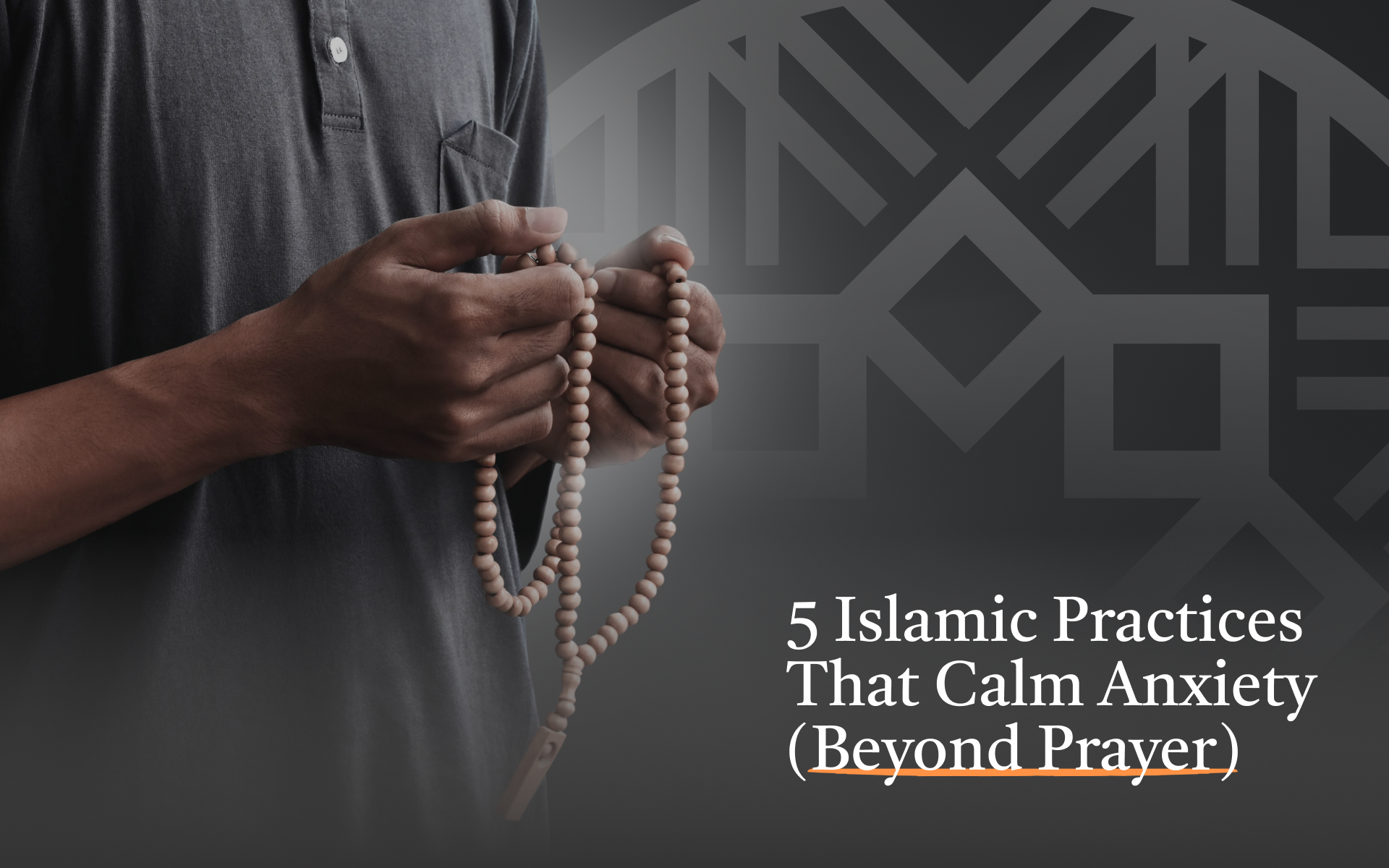
You know that cold, heavy knot that settles in your stomach without warning? The one that whispers, ‘You can’t handle this’? The room hasn’t changed, but suddenly everything feels too loud and too fast. Millions of us know this thief that steals your breath and your peace. That’s anxiety.
Anxiety feels like it’s choking you, but it’s not bigger than you. The Muslim community rightly stress that prayer is our essential source of strength. It is absolutely promised to help us survive life’s biggest tests.
But the battle with anxiety doesn’t just happen during those few precious minutes. What do you do when the anxiety hits hard on the commute, or late at night, when the silence amplifies the noise in your head?
So, what can you do when it hits hard? Here are five simple ways to bring immediate relief and help your heart find peace.
The Constant Dhikr (Remembrance)
Anxious thoughts are relentless. Your mind becomes a machine stuck on whispering terrible, unhelpful things. You must actively, forcefully replace them.
Dhikr is that powerful, immediate replacement. It is the practice of continuous, verbal remembrance of Allah, which acts as a cure for anxiety.
Constant Dhikr is more than just a mindfulness technique; it is a spiritual lifeline. You can do this with short, powerful phrases.
- SubhanAllah (Glory be to God).
- Alhamdulillah (Praise be to God).
- Allahu Akbar (God is the Greatest).
- La ilaha illa Allah (There is no god but God).
Say it while you’re walking, driving, washing dishes, or lying in bed late at night. Keep going until the wave starts to feel smaller. It always does.
And if right now the thoughts are screaming so loud that you can’t even get one ‘SubhanAllah’ out without it feeling fake or stuck in your throat, please don’t fight this battle alone. Send a message or book a session with Mindful Ummah. We’ll find the words together when you don’t have any left. Let us carry some of your burden until it feels lighter. You don’t have to be strong alone.
Tawakkul ( Reliance and Trust in God)
You know how people sometimes say “just have tawakkul,” as if it means doing nothing and waiting for miracles? That’s not what the Prophet Muhammad (PBUH) taught us at all.
One day, a Bedouin came to him with his camel untied, and he asked, “Should I tie it and then trust in Allah, or leave it untied and just say I have tawakkul?” The Prophet Muhammad (PBUH) smiled and said,
“Tie your camel first, then put your trust in Allah” (Tirmidhi:2517).
That’s the perfect picture of real tawakkul. You give everything: studying like crazy, preparing until you can’t prepare any more, apologising with your whole heart, showing up and trying like your entire future depends on it (because right now it feels like it does). And once you’ve honestly done every single thing a human being can do, you lift your hands and say,
“Ya Allah, I have done my best. The rest is with You.”
In that moment, you cut the rope of fake control you’ve been strangling yourself with.
You hand the outcome to Allah. That release, that deep breath when you finally let go, that’s true tawakkul. And it feels like peace flooding straight into your chest.
Also Read: Lonely But Not Alone: Coping with Isolation in a Connected World
Istighfar (Seeking Forgiveness)
A lot of the time, anxiety isn’t just random fear. It’s actually old guilt dressed up in scary clothes.
It’s that voice whispering, “You messed up again. You’re not good enough. You’ll never be good enough.”
Maybe it’s because of something you said in anger yesterday, or a prayer you missed, or just the feeling that you’re falling short every single day. That heaviness sits on your chest like a brick. Here’s the softest, fastest medicine Allah gave us: just say Astaghfirullah (I seek Forgiveness from Allah).
That’s it. Astaghfirullah… Astaghfirullah… Astaghfirullah.
Every single time you say it with your heart (even if you’re crying, even if you’ve said the same sin a thousand times), Allah promises to erase it.
Prophet Muhammad (PBUH) said:
“Whoever says, I seek forgiveness from Allah, the Ever-Living, the Eternal, besides Whom there is none worthy of worship, and I repent to Him, Allah will forgive them, even if their sin was fleeing from the battlefield, (a major sin).” (Tirmidhi: 3577)
So when that guilt wave hits, just start whispering Astaghfirullah like you’re wiping dust off your heart. Ten times, fifty times, a hundred times; as many times as you want.
And the moment you feel lighter, you’ll realise: the past is forgiven, the future isn’t here yet, and right now, this very second, you’re loved exactly as you are.
Sadaqah (Voluntary Charity)
Sometimes, you might be going through a crisis, and your problems might feel never-ending.
Have you ever been in a state of mind where you can’t stop thinking, “I’m going to lose this, everything’s falling apart.” It’s suffocating, right?
Here’s the quickest relief Allah gave us: give something away as Sadaqah.
It doesn’t have to be big. Ten pounds in the masjid box or a sandwich to the guy outside the shop. As soon as you help someone, you feel lighter. You are reminded that there are other people out there, struggling in life, too. And that you are not alone.
If you want a clear way to practice this beautiful trust, donate your Sadaqah through Mindful Ummah. Knowing that 100% of your gift goes directly to helping others find mental and spiritual peace is an excellent way to ease your own heart.
Conscious Wudu (Ablution)
Next time anxiety has you spiralling, just stop whatever you’re doing and make wudu; even if you don’t have to pray right now.
Being in a state of Wudu is known to bring a feeling of relief and purity. This slow, intentional process is a meditative pause.
The water itself is a powerful psychological and spiritual symbol of cleansing and immediate renewal. It forces you to pause, focus on immediate sensation, and physically signal to your brain to de-escalate the panic.
Small Changes to Routine
Anxiety is a relentless, exhausting struggle. Never think you are weak for feeling it. But you are also not helpless.
Islam offers us multiple cures to fight anxiety. Consider introducing mindful Dhikr during your routine and staying in the state of Wadu. They are small, consistent acts of connection with your Creator that can guide you towards deep peace.
Begin your healing today!
Book an appointment with Mindful Ummah.
Frequently Asked Questions
How do I lift myself out of depression?
Lifting yourself out of depression often starts with small daily steps, like staying active, connecting with loved ones, and practising mindfulness. Seeking support from Mindful Ummah, our professionals can provide guidance and coping strategies.
What are Islamic ways to manage anxiety?
Islamic ways to manage anxiety include regular prayer, dhikr (remembrance of Allah), dua, and relying on Allah’s guidance. Mindful Ummah emphasises incorporating proffesional help and spiritual practices into daily life to calm the mind.
Can giving Sadaqah help with anxiety?
Yes, giving Sadaqah (charity) can ease anxiety by fostering gratitude, compassion, and trust in Allah. It is a simple spiritual act that promotes emotional well-being and inner peace.
What are simple daily habits to reduce anxiety?
Simple habits like deep breathing, short walks, journaling, and regular prayer can lower anxiety levels. Consistency is key to creating lasting calm and balance in life.
How does Dua help with mental health in Islam?
Making dua provides comfort, hope, and a sense of connection with Allah. It helps release worry, strengthens faith, and supports emotional resilience.